
Is Chiropractic Real or Just a Placebo?
Want to see the evidence for yourself? Request an appointment or call (847) 472-1224.

Understanding Whether Chiropractic Is More Than a Placebo
With so much conflicting health information online, it’s reasonable for people to want evidence instead of hype. This article explains what a placebo really is, summarizes what research says about chiropractic care, and outlines how evidence-based chiropractic is practiced at Forza Chiropractic in Arlington Heights.
Quick answer: Yes — chiropractic is a licensed, evidence-based healthcare profession. Major clinical guidelines recommend spinal manipulation for back pain, and controlled trials show real benefits beyond placebo for many spine-related conditions.
What Is a Placebo?
A placebo refers to a treatment with no direct physiological effect that may still lead to perceived improvement due to expectation or belief. While the placebo effect is real and well-documented, it has clear limitations.
Belief alone may influence how someone feels, but it does not:
-
Restore joint motion
-
Improve measurable range of motion
-
Change spinal biomechanics
-
Support tissue healing after injury
These differences matter when evaluating whether a treatment produces real, physical change.
How Chiropractic Works Beyond the Placebo Effect
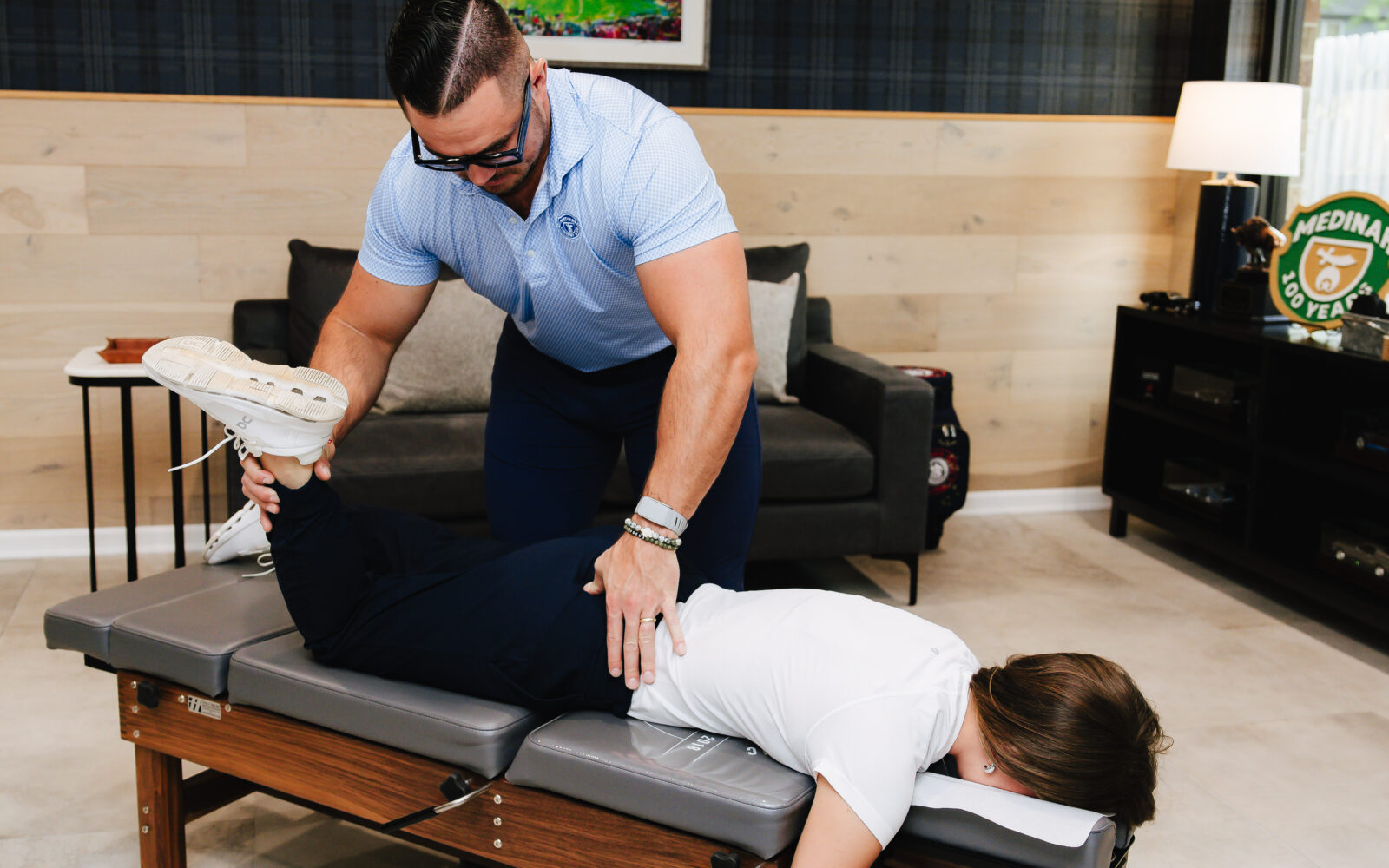
Instead of relying on belief or perception, chiropractic care applies hands-on spinal and joint manipulation to improve movement, reduce mechanical stress, and support nervous system function. Decades of research show measurable, repeatable outcomes, particularly for musculoskeletal conditions. That is why we use Chiropractic BioPhysics care in Arlington Heights: before-and-after X-rays, not promises.
What Research Shows About Chiropractic Care
Extensive study has focused on chiropractic treatment for spine-related pain and dysfunction.
Low Back Pain
A 2017 review published in JAMA found spinal manipulation to be effective for acute low back pain, with fewer risks than many medication-based approaches.
Neck Pain and Headaches
Findings from journals such as Spine and the British Medical Journal indicate that cervical and thoracic manipulation can reduce neck pain and tension-type headaches.
Function, Mobility, and Recovery
Additional research demonstrates improvements in:
-
Joint mobility
-
Functional movement
-
Posture and neuromuscular control
At Forza Chiropractic, Dr. Drew Voelsch combines spinal manipulation with movement-based rehabilitation to reinforce these outcomes—an approach supported by current evidence.
Why Chiropractic Is Not “Just in Your Head”
Placebo-based effects have clear limits. They do not restore joint alignment or motion, improve strength and coordination after injury, reduce mechanical stress on irritated tissues, or support functional recovery following auto accidents or repetitive strain.
When applied appropriately and paired with active care, chiropractic treatment often addresses these physical factors directly. For that reason, chiropractic is commonly included in multidisciplinary care plans for spine-related conditions.
Addressing Common Criticisms of Chiropractic
Healthy skepticism plays an important role in healthcare. Over time, chiropractic has evolved into a profession that is licensed and regulated in all 50 states, supported by a growing body of research, and recognized by insurers and healthcare systems.
Even so, practice styles vary widely.
Care at Forza Chiropractic in Arlington Heights emphasizes:
-
Evidence-informed decision-making
-
Clear, goal-oriented treatment plans
-
Transparency and patient education
Scare tactics, long-term contracts, and one-size-fits-all approaches are intentionally avoided.
A Practical Way to Think About Chiropractic
Chiropractic should not be viewed as magic, a cure-all, or a placebo. Instead, it serves as a conservative, hands-on approach focused on restoring motion, improving function, and helping the body move as it was designed to.
For many patients in Arlington Heights and nearby communities, that framework aligns with what they are looking for in care.
How to spot an evidence-based chiropractor
A legitimate, modern chiropractic clinic looks a lot like any other measurement-driven healthcare setting: a thorough exam before any treatment, imaging only when clinically appropriate, a specific diagnosis, a care plan with a defined endpoint, objective re-exams that prove whether you’re improving, and referrals out when your problem isn’t a chiropractic problem.
That last one matters. At Forza Chiropractic in Arlington Heights, some of the most important calls we make are the ones where we say “this isn’t ours to treat” and coordinate with your physician.
Our answer to the skeptics: measure it
Our practice is built on Chiropractic Biophysics (CBP®) — one of the most published methods in the chiropractic literature, focused on measurable spinal structure. We take digital X-rays when clinically necessary, quantify alignment, correct it with specific adjusting and rehab, and then re-measure to show the change. If the numbers don’t move, the plan changes. That’s the standard skeptics should hold every clinic to — and the one we hold ourselves to with every new patient.
This is also how you can judge any clinic, including ours. Our care is built on chiropractic biophysics in Arlington Heights — digital X-ray, measured spinal angles, and a re-exam that shows whether those numbers actually moved. If they have not moved, the plan changes rather than quietly continuing. The same standard applies to our posture correction in Arlington Heights: the before-and-after is a number on a chart, not a feeling.
Frequently Asked Questions
Is chiropractic scientifically proven?
For musculoskeletal conditions — low back pain, neck pain, cervicogenic headaches — spinal manipulation has meaningful research support, including inclusion in mainstream medical guidelines. Claims beyond the musculoskeletal system are not well supported, and evidence-based chiropractors don’t make them.
Are chiropractors real doctors?
Chiropractors hold a Doctor of Chiropractic (DC) degree — a 4-year doctoral program with national boards and state licensure. They are physician-level providers for musculoskeletal care, not medical doctors, and a good one works alongside your MD rather than in place of them.
Is chiropractic care safe?
For appropriately screened patients, adverse events from spinal manipulation are rare, and most side effects are mild, short-lived soreness. A careful history, exam, and imaging when indicated exist precisely to screen out the cases where adjusting isn’t appropriate.
How do I know if my chiropractor is helping?
You should see it in numbers, not just feel it: pain and function scores, range of motion, and — for structural correction — before-and-after measurements on X-ray. If your clinic never re-examines you, ask why.
Considering Chiropractic Care?
When back pain, neck stiffness, headaches, or movement limitations interfere with daily life, a brief conversation can help determine whether chiropractic care is appropriate.
Belief isn’t required—understanding how the approach works and whether it fits the situation is what matters.
It helps to understand what a chiropractic adjustment actually is: a controlled, specific spinal manipulation performed by a doctor of chiropractic — a licensed provider who trains for years in spinal anatomy and biomechanics. Many medical doctors now co-manage patients with chiropractors as part of integrated medicine, because research supports manipulation of the spine for back and neck pain over short-term medication alone. Chiropractic treatment is not a substitute for medical care — it is a measurable, complementary discipline.
Request your evaluation at Forza →
Want the measured version for your own spine?
If you are in Arlington Heights or the northwest suburbs, we can show you what is actually going on — digital X-ray, measured spinal angles, and a plan built on those numbers rather than on how you happen to feel that day. Tell us what is going on and we will call you to schedule. Most new patients are seen the same week.
Prefer to watch instead of read?
More posture tips, patient stories, and spine education on our channel — new videos all the time.
Ready to feel the difference precise care makes?
Whether your pain is brand new or something you have lived with for years, we will build a plan that actually moves you forward.