
Why Your Back Pain Keeps Coming Back (And How to Fix the Root Cause)
If your back pain fades for a few weeks and then returns, you’re not unlucky — you’re likely managing symptoms instead of correcting the cause. It’s the single most common story new patients tell us: something helps for a while, then the same ache creeps back, usually in the same spot. This post explains why that cycle happens and what it actually takes to break it. (If you’re currently dealing with it, our back pain treatment page covers how we evaluate it in person.)
The relief-relapse cycle
Most back pain remedies are genuinely helpful — at the wrong job. Massage relaxes tight muscle, but if that muscle is tight because it’s guarding an unstable segment of your spine, it will tighten right back up. Medication quiets the pain signal without changing what’s producing it. Rest calms a flare, but weakens the very muscles your spine relies on for support. Even chiropractic adjustments, done generically, can fall into this trap: they restore motion and feel great, but if nothing measures or addresses why that joint keeps locking up, the relief has a shelf life.
None of these are bad tools. They’re relief tools. Relief and correction are different jobs, and the relapse cycle is what happens when relief is asked to do correction’s work.
Recurring pain is usually a structural problem
Your spine is a load-bearing structure. When its alignment is off — a forward-shifted head, a flattened or exaggerated curve, a pelvis that’s rotated — load stops distributing evenly. A few joints, discs, and muscle groups end up doing far more than their share, day after day. Those overworked tissues are where your pain keeps showing up.
That’s why the location of recurring pain is such a useful clue. Random strains happen in random places. Structural overload happens in the same place every time, because the structure hasn’t changed between episodes. The pain isn’t coming back — it never actually left. It just dropped below the threshold where you noticed it.
A quick self-check: signs your back pain is structural
- It returns to the same spot, or the same side, every time
- It’s predictable: long sitting, long standing, or certain activities reliably bring it on
- Mornings are stiff, and “warming up” temporarily helps
- Each episode seems to arrive a little sooner or last a little longer than the last
- Relief measures (massage, heat, medication) work — but never for long
- Photos of your posture show your head ahead of your shoulders, or one shoulder or hip riding higher
Three or more of these is a strong signal that something structural is driving the pattern — and that another round of symptom relief won’t be the round that finally sticks.
What actually breaks the cycle
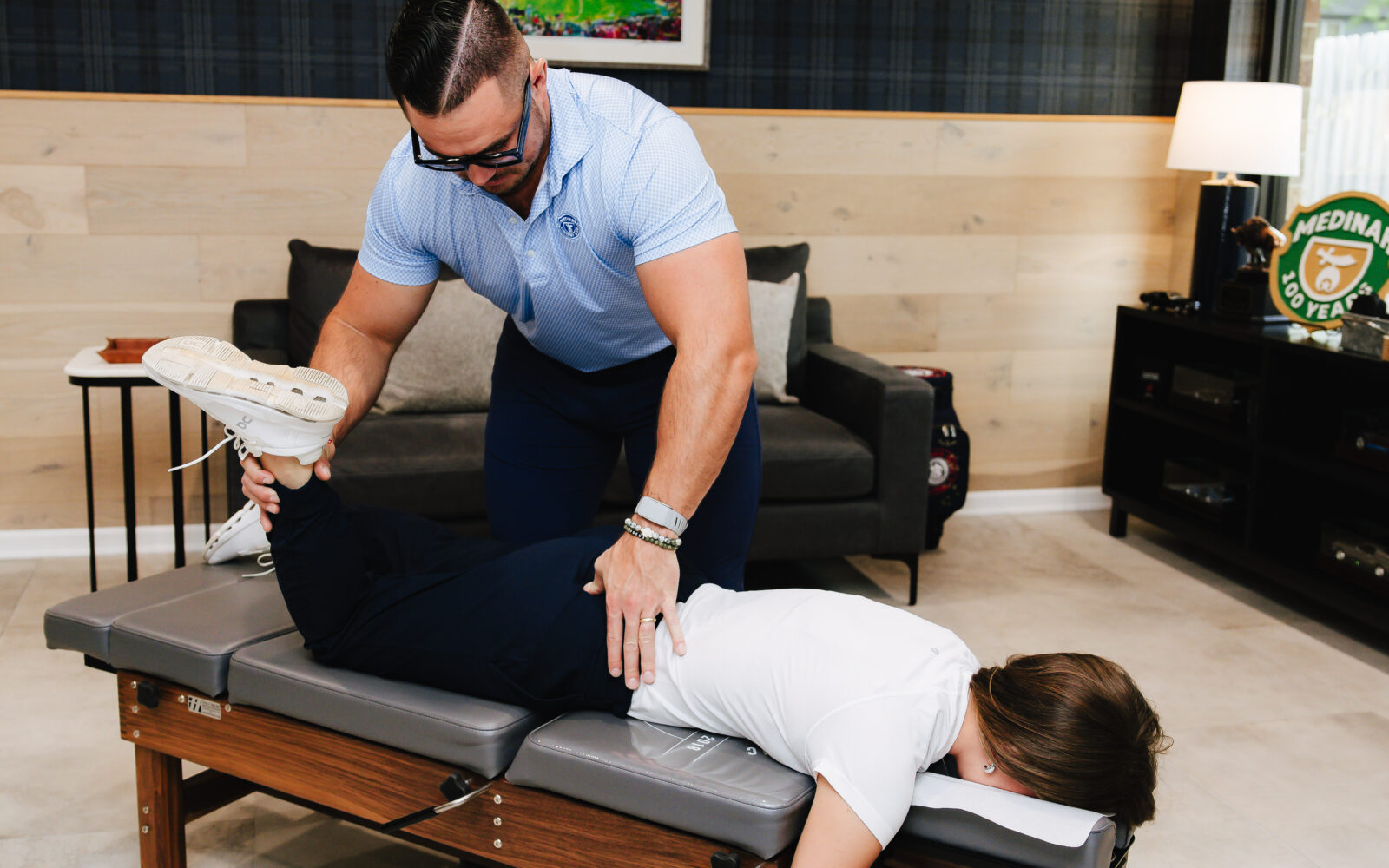
Correction starts with measurement. At Forza we use digital X-rays and posture analysis to see exactly how your spine is carrying load — not to confirm that your back hurts (you already know that), but to find the specific structural reason it keeps hurting. From there, corrective chiropractic care works in phases: restore motion to restricted joints, retrain alignment with specific adjustments and traction, then reinforce the correction with targeted rehab and strengthening so your muscles hold the new position.
The key difference from relief care is the re-measure. Weeks in, we take the same measurements again and compare. Either the structure is changing or it isn’t — and you see it on the images, not just in how you feel that day. That objectivity is what separates “I think it’s better” from “it’s fixed and here’s why it should stay that way.”
What you can do today
- Break up long sitting: stand or walk for one to two minutes every 30 minutes — frequency beats duration
- Raise your screen to eye level so your head can sit back over your shoulders
- Strengthen your hinge: learn to bend at the hips instead of rounding your lower back
- Walk daily — gentle, rhythmic loading is one of the best things a cranky back can get
- Track your pattern: note when pain shows up and what preceded it; the pattern is diagnostic gold
When to get it evaluated
If your back pain has come back three or more times, it has earned a real evaluation. And some symptoms shouldn’t wait at all: pain with numbness or weakness in a leg, pain following an accident or fall, or any change in bladder or bowel control warrants urgent medical assessment.
For everyone else stuck in the relief-relapse loop: the first visit is a conversation and a set of measurements. You’ll leave knowing what’s structurally driving the pattern — and what it would take to correct it. Request an appointment at our Arlington Heights clinic and let’s find the reason it keeps coming back. If your back pain keeps coming back, our back pain chiropractor in Arlington Heights page explains how we measure the cause on digital X-rays and correct it.



Prefer to watch instead of read?
More posture tips, patient stories, and spine education on our channel — new videos all the time.
Ready to feel the difference precise care makes?
Whether your pain is brand new or something you have lived with for years, we will build a plan that actually moves you forward.